The Architecture of Chaos: Global Reinsurance as the Final Bulwark Against Geopolitical Polycrisis

Risk arbitrage within an ecosystem of systemic fragmentation, tariff shocks, and the nascent protectionism of critical minerals.
Mercado Asegurador25 de abril de 2026 Peter Sundheimer

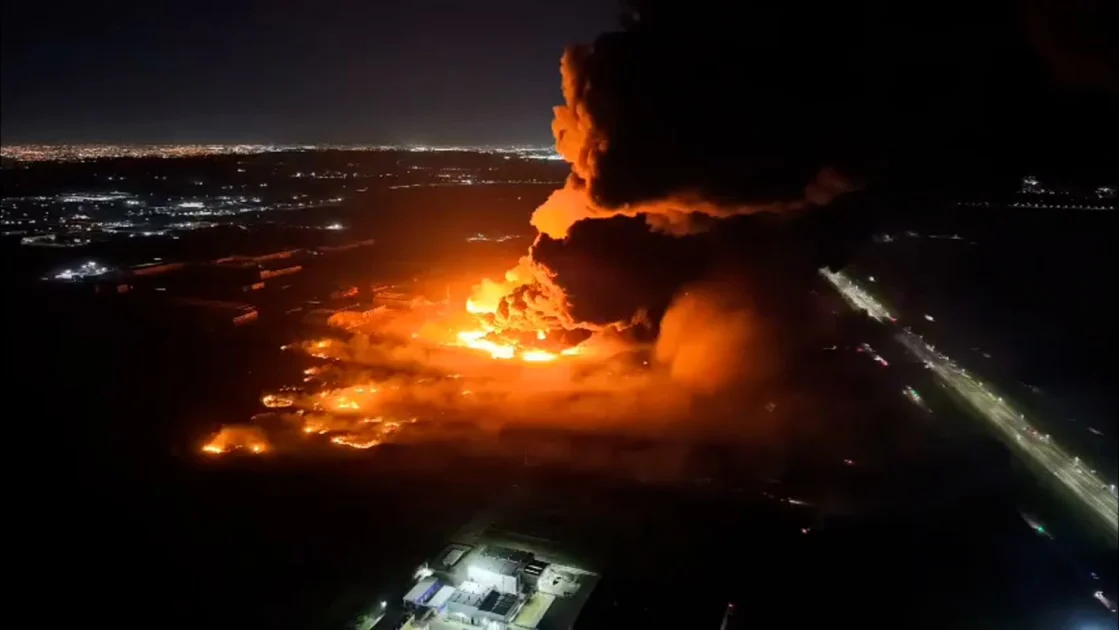
The global insurance and reinsurance industry has transcended its traditional role as a mere loss-transfer mechanism to become the most reliable barometer of capital’s tectonic instability. In the current 2026 cycle, the market is besieged by a technical "triple pincer" movement: the erosion of conventional boundaries in war risk, the exacerbated volatility of underlying assets due to frictions in the Strait of Hormuz and the Donbas, and a supply chain reconfiguration compelled by resource nationalism. The latent confrontation between Iran and the United States has transitioned from a peripheral tail risk to the core of Marine War premiums; consequently, rates for critical transits have undergone upward corrections of up to 2,000% relative to the previous decade's baseline. This is no isolated phenomenon. The protracted conflict in Ukraine has precipitated a systemic exclusion of cyber risks and business interruption contingencies linked to sovereign actors, forcing underwriters to recalibrate accumulation modeling against the specter of a systemic event capable of overwhelming global technical reserves.

​From a strictly financial vantage point, the market is navigating a persistent "hard cycle" defined by an unprecedented nuance: the strain on solvency margins is no longer driven solely by direct loss ratios. Instead, it arises from the spread between replacement cost inflation and investment portfolio yields, both of which are conditioned by monetary policies struggling to absorb supply shocks triggered by tariff wars. The imposition of reciprocal punitive duties—particularly across the Transatlantic and Pacific axes—has distorted Export Credit and Political Risk Insurance (CPRI) frameworks. In this environment, corporate insolvency is no longer evaluated through the prism of cash flow efficiency alone, but rather through operational resilience in the face of abrupt shifts in regulatory and customs protocols. Within this framework, critical minerals—lithium, cobalt, and rare earths—have emerged as the new epicenter of political risk. Insurers are now deconstructing mining and processing exposures not merely as general liability concerns, but under the paradigm of national security. In such cases, the revocation of licenses or the nationalization of assets due to ESG (Environmental, Social, and Governance) non-compliance has evolved into risks that are increasingly uninsurable without captive capital structures or explicit state backing.

​Ultimately, the sustainability paradox serves as the catalyst for new structural economic frictions. As reinsurers tighten decarbonization mandates, the geopolitical imperative for energy autonomy compels states to reactivate hydrocarbon infrastructures, creating a decoupling between available insurance capacity and energy security demands. This protection gap is increasingly absorbed by alternative capital vehicles and Catastrophe Bonds (CAT Bonds), which, despite injecting liquidity, introduce heightened volatility during mass correlation events. The sector has thus entered a phase of "survival reinsurance," where the ability to model non-linear contingencies—ranging from a blockade of the Strait of Malacca to a cyberattack on critical European infrastructure—determines not only the solvency of individual firms but the very viability of transactional trade in an era of irreversible geopolitical fragmentation.

Te puede interesar
Lo más visto