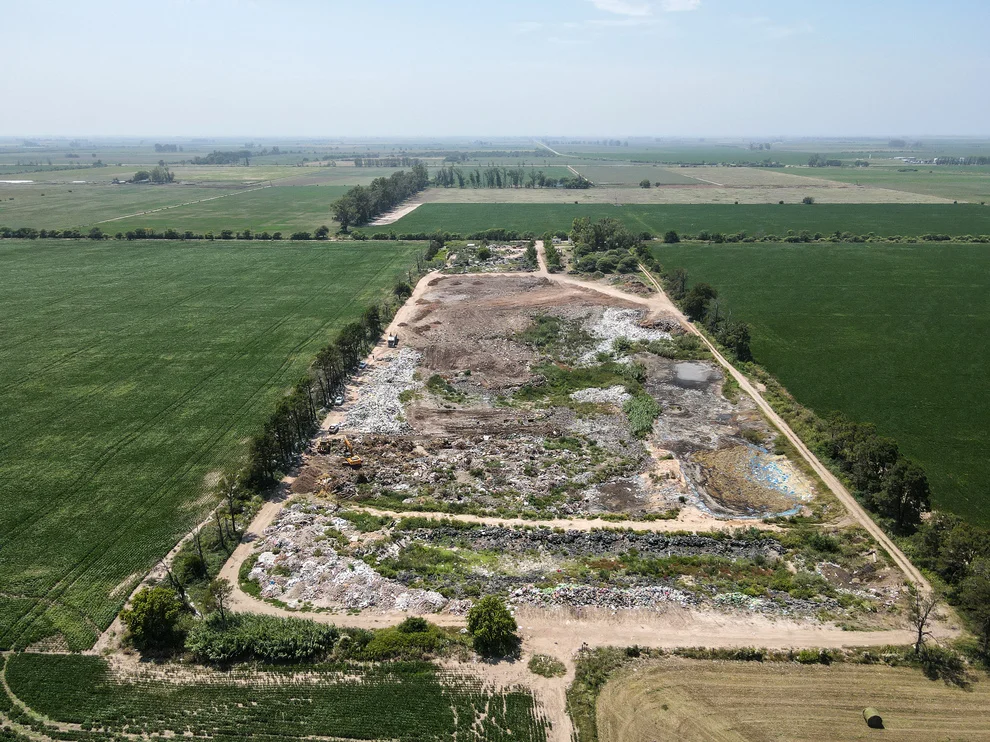
The regions of Asia and the Middle East stand at a critical crossroads due to the severe environmental consequences of decades of intense industrialization, accelerated urbanization, and deep reliance on fossil fuels. The degradation of ecosystem matrices in these territories compromises local biodiversity while directly impacting public health, water security, and global economic stability. In response to this outlook, a fundamental technical and political shift is occurring, prioritizing the deployment of cutting-edge technologies for soil recovery, water body decontamination, and the mitigation of harmful atmospheric emissions.
In the Indian subcontinent, air pollution caused by fine particulate matter ($PM_{2.5}$) and the degradation of critical river basins, such as the Ganges, present large-scale structural challenges. To mitigate this impact, comprehensive programs have been designed to combine the modernization of industrial effluent treatment plants with predictive monitoring driven by artificial intelligence. Furthermore, nature-based solutions are being actively promoted, including massive peri-urban reforestation initiatives designed to act as carbon sinks and biological filters against the dispersion of airborne contaminants.
Meanwhile, Vietnam experiences severe pressure on its water resources and agricultural soils, intensified by the rapid development of its manufacturing zones and a legacy of persistent pollutants. The response from government and private sectors centers heavily on bioremediation, utilizing indigenous microorganisms to degrade volatile organic compounds and heavy metals in high-risk areas. Additionally, the country is advancing the reconversion of its industrial parks into circular models, optimizing the water cycle and systematically reducing direct waste discharges into river deltas.
The environmental panorama in China highlights a decisive transition toward carbon neutrality goals and the development of "sponge cities" capable of sustainably managing the urban water cycle. The Asian powerhouse applies advanced carbon capture and storage technologies, complemented by stringent emission control regulations for both vehicles and heavy industries. Massive investment in desulfurization and denitrification infrastructure at power plants has yielded measurable reductions in smog indices across major urban centers in recent years.
South Korea bases its strategy on digitalization and the circular economy applied to urban environmental management. Through the deployment of IoT sensor networks, Korean authorities monitor air and water quality in real time, enabling immediate analytical responses to pollution spikes. The nation stands out in the treatment and valorization of technological waste and the restoration of coastal marine ecosystems through the creation of artificial reefs and the recovery of tidal flats that capture blue carbon.
Shifting the analysis to the Middle East, technical priorities pivot toward extreme freshwater scarcity and the management of hydrocarbon-related pollution. Jordan focuses its remediation efforts on optimizing transboundary water resources and restoring arid soils through advanced regenerative irrigation techniques and the stabilization of overexploited aquifers. Decentralizing wastewater treatment for safe reuse in high-tech agriculture constitutes the central pillar of its environmental resilience.
The United Arab Emirates leads regional sustainability projects through the development of eco-cities and massive investment in low-impact desalination technologies, using renewable energy to mitigate the carbon footprint of the process. Coastal remediation and the restoration of mangrove forests remain state priorities to protect marine biodiversity and establish natural barriers against erosion and industrial sedimentation.
In a similar vein, Qatar addresses the challenges of thermal stress and the urban ecological footprint through bioclimatic architecture and the implementation of advanced biological sludge treatment systems. The country targets its remediation programs at recovering soils affected by heavy industrial activities, applying soil washing and chemical stabilization methodologies to reintegrate degraded land into green urban development and natural reserve preservation.
Finally, Oman aligns its efforts toward mitigating the environmental impact of energy production and protecting its unique marine environment. The Sultanate has launched pioneering initiatives in carbon dioxide mineralization within peridotite rock formations, a geological method that permanently confines the gas. This approach is complemented by rigorous industrial waste management and the recovery of modern oasis ecosystems using traditional conservation techniques adapted to current climate demands.


Environmental Remediation in Ibero-America: Technological Strategies and Evolving Frameworks for Ecological Recovery

El desafío de la restauración ecológica: Estrategias de remediación ambiental frente a la crisis climática en Asia y Oriente Medio

The Microbial Horizon: Glacial Retreat, Permafrost Degradation, and the Emerging Dynamics of Waterborne Pathogenesis

Máxima alerta en Cafayate: Intensifican el operativo contra los incendios forestales bajo la amenaza del viento Zonda

MENDOZA SE UNE POR LA BASURA: MUNICIPIOS DEL GRAN MENDOZA SE CAPACITAN PARA GESTIONAR SUS RESIDUOS

La SSN habilita a las aseguradoras a comercializar seguros de salud con cobertura prestacional


Neuquén busca financiamiento internacional: presentó ante el BID un mega plan de infraestructura para Vaca Muerta

Megaoperativo en Jujuy: Exitoso simulacro interinstitucional ante una emergencia aeronáutica de gran escala