


Climate Finance Record: Is Funding Reaching the Most Vulnerable Regions in Latin America, India, and Central Asia?
RNAt a critical juncture for the global ecological transition, the world's leading Multilateral Development Banks (MDBs) have announced a historic milestone: $163 billion allocated to climate finance in 2025. The joint annual report, coordinated by these institutions, points to a 21% jump in funds for developing economies, which reached an all-time high of $103 billion.
Entities such as the Inter-American Development Bank (IDB), the Asian Development Bank (ADB), and the European Bank for Reconstruction and Development (EBRD) claim they are well ahead of the 2030 projections established at the COP29 summit in Baku. Yet, when analyzing the geographic distribution and financial instruments of these funds, the reality on the ground in Latin America, India, and Central Asia exposes starkly disparate structural challenges.
Latin America and the Caribbean: The Debt Trap and the Adaptation Gap
In Latin America, the narrative of successful climate finance collides directly with the region's fiscal reality. While the IDB Group and other entities have funneled significant resources to the region, the operational terms raise critical alarms:
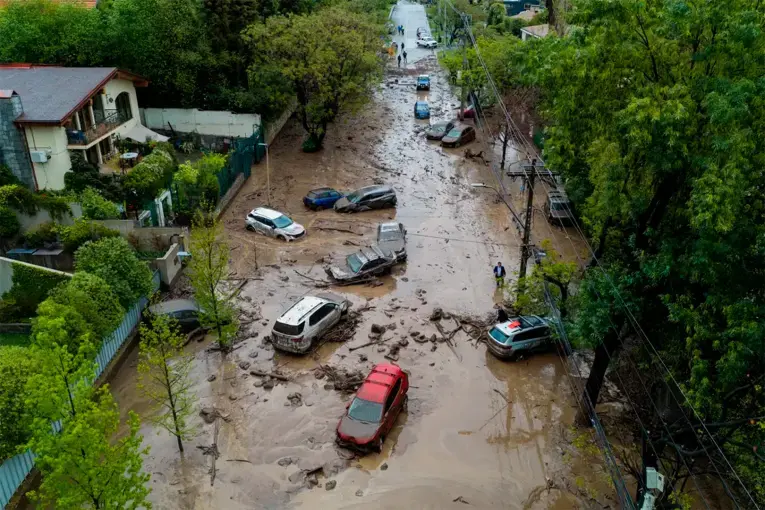
Loans vs. Grants: Over 80% of climate finance flowing into Latin America arrives in the form of sovereign loans—debt that nations must eventually repay. Heavily indebted countries are forced to take on further financial burdens simply to repair public infrastructure destroyed by hurricanes in the Caribbean or extreme flooding in South America.
The Critical Need for Adaptation: While the region urgently requires funding for adaptation—such as water resource management to combat severe droughts in the Andean agricultural sector or coastal defenses against rising sea levels—MDBs heavily prioritize mitigation (e.g., wind farms in Brazil or solar plants in Chile). Mitigation projects are far easier to finance through public-private partnerships because they yield immediate commercial returns, leaving vital local resilience projects severely underfunded.
India: The Dilemma of Decarbonizing a Giant
India has become a central focal point for the ADB and the World Bank due to the sheer scale of its energy transition. However, its climate finance landscape reveals a highly uneven distribution of risk:
The Mitigation Juggernaut: India has successfully attracted billions in private and multilateral capital for utility-scale solar and wind infrastructure. The country’s massive market size and mature regulatory frameworks make it a prime target for private green investments.
Exclusion of Smallholder Agriculture: Despite the heavy inflow of capital into energy infrastructure, agricultural adaptation receives only a fraction of the budget. Over 600 million people in India depend on agriculture, a sector facing increasingly erratic monsoon patterns. Accessing direct credit for small-scale, climate-resilient farming remains blocked by complex multilateral compliance processes and bureaucratic hurdles.
Central Asia: Glacial Melt and Cross-Border Water Risks
In the Central Asian republics (such as Uzbekistan, Kazakhstan, Kyrgyzstan, and Tajikistan), the climate transition is financed primarily through the EBRD and the ADB, where geography presents severe environmental risks:
Water Stress and Glacial Retreat: With glaciers melting at an alarming rate across the Pamir and Tian Shan ranges, the region faces acute water scarcity, threatening both food security and hydropower generation. However, multilateral frameworks have been slow to structure cross-border adaptation projects due to localized geopolitical tensions and the lack of unified regulatory standards.
An Uphill Battle for Decarbonization: High-emission economies like Kazakhstan receive targeted funding to transition away from coal and gas. Yet, as upper-middle-income countries, their access to concessional funds (highly low-interest loans) is strictly limited, significantly raising the capital cost of their industrial decarbonization.
Conclusion: The Urgent Need to Localize Climate Finance
While the record $163 billion proves that global capital can be mobilized, these figures will only translate into real-world resilience if MDBs reform their operational models.
Climate finance cannot operate under a one-size-fits-all framework. While Latin America requires innovative debt-relief mechanisms (such as debt-for-nature swaps) to preserve fiscal space, Central Asia urgently needs transboundary water management structures, and India must direct its massive green capital away from exclusive urban energy grids and directly into rural climate resilience.


El resguardo de la competitividad emergente: Mitigación climática anticipada y resiliencia financiera ante el endurecimiento regulatorio global


La nueva solvencia: Cómo la auditoría de la cadena de suministro en los criterios ESG redefine el riesgo de crédito global

Resiliencia Hidrometeorológica en el Upstream y la Minería de Litio: La Reingeniería Urgente del Tratamiento de Lodos ante el Súper El Niño

Súper Niño en Neuquén: El mapa de exposición de activos y las amenazas de parálisis operativa en Vaca Muerta


¿Hacia dónde va el seguro argentino? Desafíos y oportunidades de la cooperación con el Tesoro de EE.UU.