
Standardizing Urban Resilience: The New Risk Scoring Paradigm for the Americas
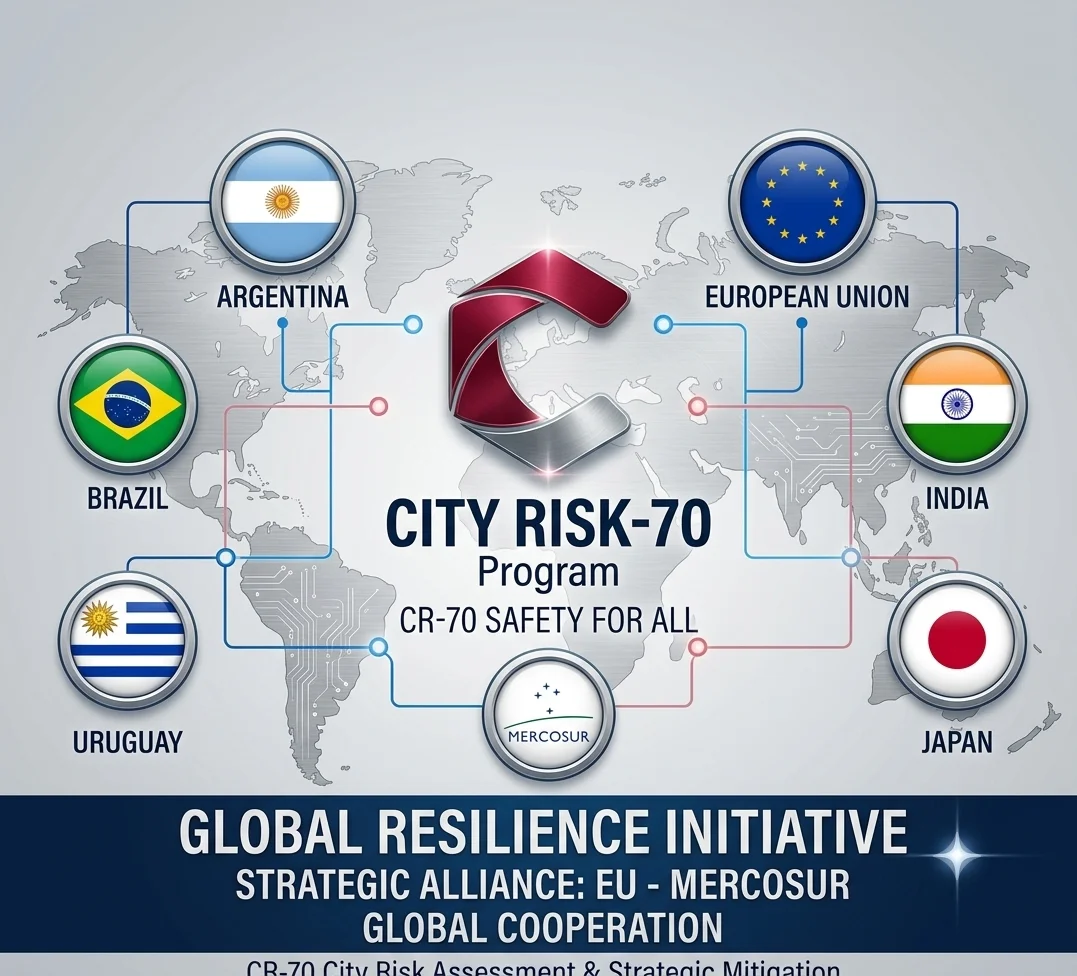
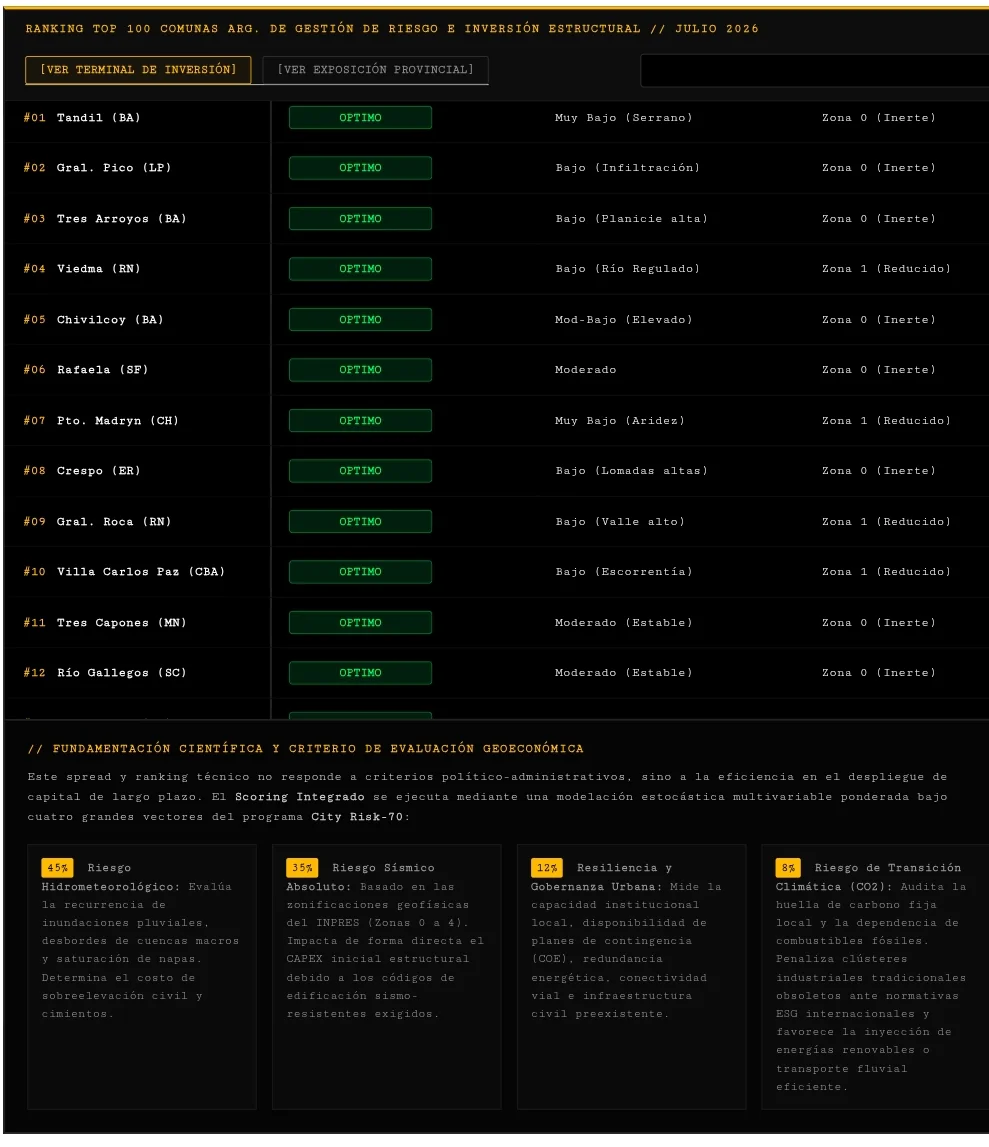
RNThe City Risk-70 Program has formalized the launch of its innovative risk scoring model, a technical instrument designed to evaluate and classify the structural safety and response capacity of local governments. This system is anchored in the Multidimensional Resilience and Vulnerability Model (MRM-2026), which rigorously analyzes 120 strategic nodes to determine a territory's stability against adverse events. By integrating complex data sets, the program generates a standardized ranking of safe cities, categorized from highest to lowest performance. This labeling process, currently being deployed across the Mercosur region, is designed as a scalable framework with a clear roadmap for expansion throughout the American continent in the near future. The central objective of this initiative is to provide a neutral, objective metric that allows municipalities to demonstrate their institutional robustness to international capital markets, effectively bridging the gap between local governance and global financial standards.
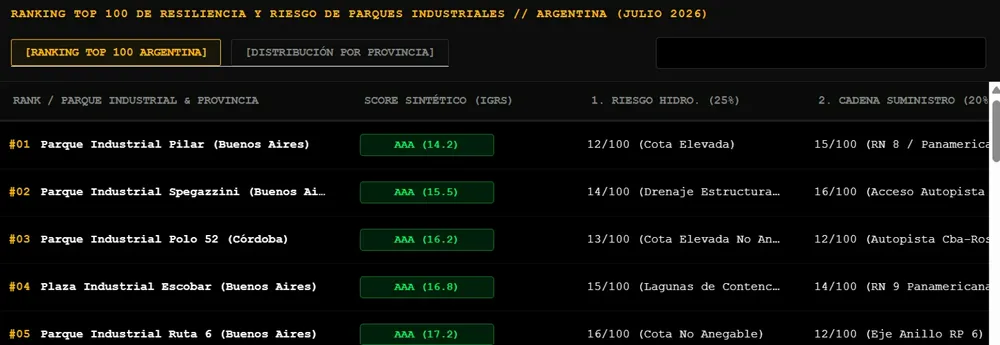
​The technical architecture of the scoring model weighs critical variables that define the long-term viability of large-scale projects in sectors such as agribusiness, mining, energy, and logistics. The analysis delves into hydro-climatic threats—including floods, droughts, and extreme weather patterns—alongside anthropogenic and technological risks derived from industrial activity and critical infrastructure failure. The model evaluates the vulnerability of essential assets, including international airports, sanitation systems, energy grids, industrial parks, and healthcare facilities. By applying a "resilient elasticity" criterion, the scoring measures a city's ability to absorb systemic shocks and maintain operational continuity. This level of technical traceability significantly reduces uncertainty for private investors, fostering a competitive environment where safety and sustainability are the primary drivers for capital allocation.
​Beyond the statistical ranking, the City Risk-70 Program, in conjunction with its specialized Project Accelerator, offers an integrated framework for public-private partnership (PPP) articulation. Local governments across the region are invited to participate in this ecosystem to enhance their technical performance and institutional visibility. Furthermore, the program extends an open invitation to diverse professionals from across the continent—including risk managers, urban planners, data scientists, and financial engineers—to join the initiative and begin applying these advanced diagnostic tools within their respective jurisdictions. The benefits of integration are twofold: while the ranking serves as a "seal of safety" for investors, the program provides participating municipalities and professional teams with direct assistance in identifying international funding sources and implementing advanced financial engineering. Through instruments such as green bonds, trust funds, and asset tokenization, local governments can finance critical infrastructure improvements without compromising fiscal equilibrium. As the program expands its footprint from Mercosur to the rest of the Americas, it establishes a new continental standard for urban resilience, ensuring that regional economic growth is underpinned by territories that are both secure and technologically traceable.


Fortalecimiento resiliente: El programa CR-70 y la transformación de la gestión del riesgo de desastres en los municipios argentinos

Systemic Risk Management and Infrastructure Structuring: City Risk-70 Deploys a New Mitigation Model for Governments and Corporations

City Risk-70 Despliega un Nuevo Modelo de Mitigación para Gobiernos y Empresas en Iberoamérica y Alemania

Resiliencia de escala subnacional: el imperativo estructural detrás del despliegue regional del Programa City Risk-70

Gobernanza Algorítmica con Rostro Humano: La Inteligencia Artificial como Acelerador del Desarrollo Municipal

El Quiebre de la Previsibilidad: El Límite de los Modelos Actuariales ante el Clima Extremo

El laberinto de la opacidad: Fondos paralelos en el sector financiero y la elusión sistemática de obligaciones alimentarias

El laberinto de los embargos preventivos de AGIP: cuando la falta de notificación asfixia al contribuyente