The Mirage of Abundance: Systemic Decay and the Reckoning of Water Mismanagement

The Criminal Negligence of Dam Administration and the Exploding Costs of Institutional Incompetence Amidst Global Hydrological Collapse.
Comunidades Seguras10 de abril de 2026 Peter Sundheimer

A drought does not begin with a dry sky; it begins with the rot of administrative complacency and the catastrophic erosion of infrastructure readiness. There is a lethal correlation between periods of surplus rainfall and the total abandonment of rigorous water asset management. When reservoirs sit at full capacity, a "mirage of abundance" takes hold of decision-makers, leading to the criminal postponement of critical investments and a brazen disregard for long-term predictive modeling. This psychological and technical failure is the definitive prelude to structural socio-economic collapse. By failing to look beyond the surface of a full dam, ill-equipped administrations transform a manageable climatic cycle into a systemic disaster of human making.

The management of critical water infrastructure demands a level of technical mastery that goes far beyond staring at a gauge. It requires an aggressive understanding of hydrodynamics, sedimentation rates, and, crucially, a risk-management framework that treats uncertainty not as a variable, but as a constant threat. Yet, the global landscape is littered with concessions operating under the terminal disease of short-term profit or, worse, a technical bureaucracy devoid of fundamental expertise. The sheer lack of idoneity in the personnel tasked with operating these assets is staggering. When the first indicators of basin depletion emerge, these "administrators" are often paralyzed, unable or unwilling to execute strategic reserve preservation because they have become addicted to the false security of high water marks. The development of a modern society—its industry, its energy, its very survival—cannot and must not be held hostage by the improvidence of a poorly managed concession or staff who lack the basic professional competence to navigate a crisis.

The exposure of populations tethered to these mismanaged systems is absolute. The uncertainty generated by technical ineptitude does not merely "impact" a city; it destabilizes the very foundations of food security and the power grid. We see the wreckage of this negligence across the globe. In the United States, the Colorado River system and its primary arteries, Lakes Mead and Powell, have faced existential lows that should have been mitigated decades ago. Despite screaming scientific warnings, the initial political and technical response was a masterclass in denial, betting on a natural "self-correction" that never came. The result is a southwest on the brink of a hydrological "dead pool," a direct consequence of prioritizing political expediency over engineering reality.

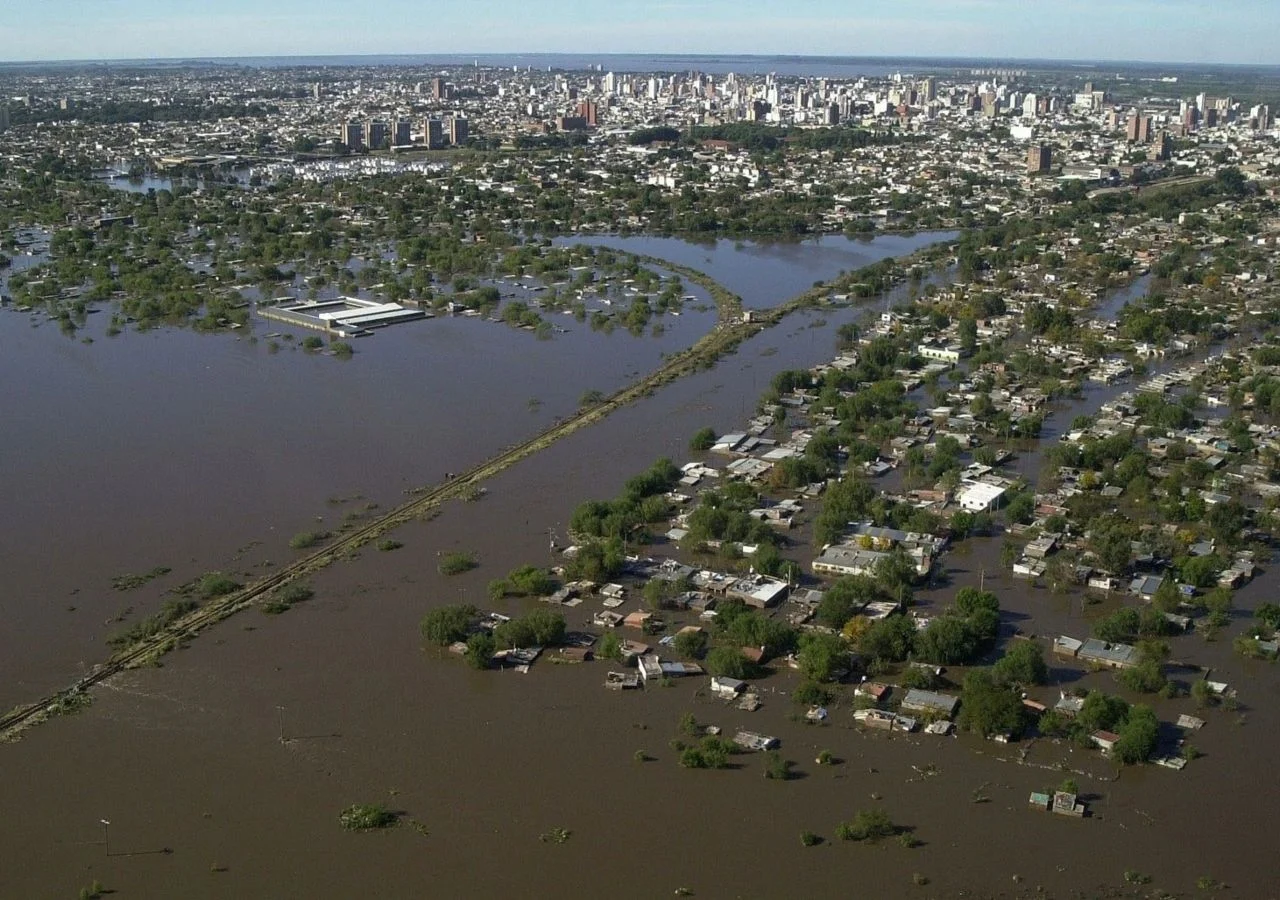
The failure is even more visceral in Argentina and Iran. In Argentina, the Paraná River’s historic lows have laid bare a total absence of infrastructure dredging and adaptive planning, strangling international trade and fresh water access. It is a testament to how a lack of professionalized basin management can spike a nation’s risk profile overnight. Meanwhile, Iran serves as a grim laboratory for what happens when water management is treated as a tool for short-term vanity rather than a scientific necessity. The indiscriminate damming and the reckless exploitation of aquifers have triggered accelerated desertification and profound social unrest. The Iranian crisis is not an "act of God"; it is an indictment of an institutional collapse where infrastructure policy was allowed to ignore the immutable laws of hydrology.

Perhaps most damning is the hidden cost of critical infrastructure replacement. When a water system fails due to neglect or incompetent oversight, the capital required to rehabilitate silt-choked dams, obsolete treatment plants, or leaking distribution networks is exponentially higher than the cost of preventive maintenance. Water infrastructure is "critical" because its failure is a kill-switch for the economy. The lost opportunity costs—industrial shutdowns, total crop failures, and the hyper-inflation of energy prices—dwarf any "savings" a concessionaire claimed to achieve through corner-cutting. A poorly managed concession is a ticking financial bomb for the State, which is inevitably forced to bail out a vital service that was bled dry by technical mediocrity.

The professionalization of water management entities is no longer a suggestion; it is a survival mandate. Uncertainty is not an excuse for failure; it is a variable that must be crushed through stochastic modeling, high-resolution satellite monitoring, and a ruthless commitment to technical excellence. Civil society must demand that those holding the keys to our most vital resource possess certified, world-class idoneity. We cannot allow the next fifty years of human progress to be sabotaged by bureaucrats who do not understand the water cycle. Water security is the bedrock of political and economic stability, and any negligence in its administration is an act of systemic sabotage against the future of the state.

Te puede interesar
Lo más visto