The Hormuz Chokehold: How a Silent Gas Crisis is Throttling the Global Tech Race

Geopolitical Friction in the Middle East Threatens the Invisible Backbone of High-Tech Manufacturing and Global Supply Chains.
Logística y Transporte15 de abril de 2026 Peter Sundheimer

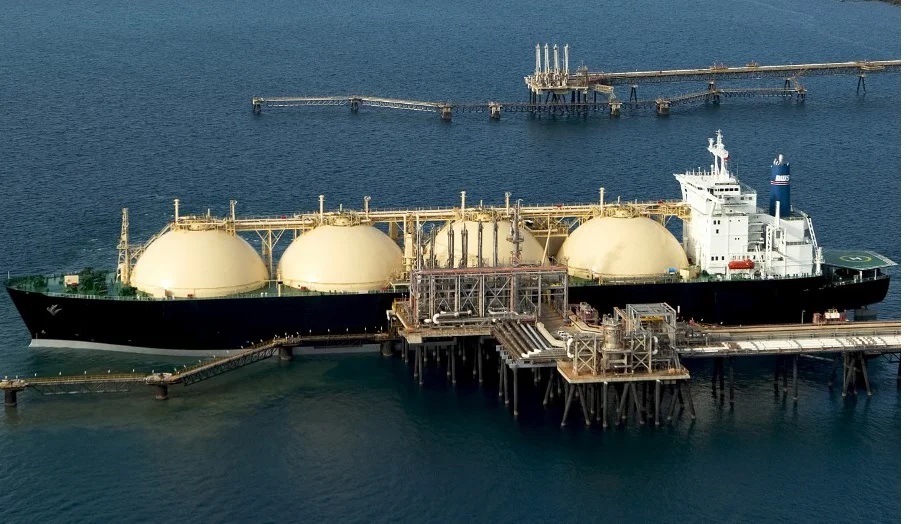
The escalating confrontation between the United States and Iran has moved beyond the traditional theater of oil tankers and missile batteries, manifesting in a sophisticated and silent economic threat: the paralysis of the global helium supply. While the world watches the fluctuating price of crude, a far more specialized crisis is unfolding within the industrial complexes of Ras Laffan, Qatar. As one of the planet's primary sources of helium, Qatar’s production—inextricably linked to its massive Liquefied Natural Gas (LNG) infrastructure—is currently being held hostage by the geographical reality of the Strait of Hormuz. The narrowing of this maritime corridor has effectively severed the primary artery for a gas that, despite its lightness, carries the heavy burden of sustaining the world’s most advanced technological ecosystems.

Helium is not an independent commodity; it is a precious stowaway within natural gas deposits. In the sprawling facilities of Qatar, the gas is captured during the cooling and liquefaction of methane. However, recent kinetic actions in the region and the tightening of naval blockades have forced a significant scale-back in production. For the global supply chain, this represents a systemic shock. Unlike other industrial gases, helium cannot be synthesized and is notoriously difficult to store and transport. The specialized cryogenic ISO-containers required for its movement are now accumulating at ports, unable to safely traverse the Strait. This bottleneck is not merely a logistical delay but a total disruption of the "just-in-time" delivery models that global tech giants rely on to keep their fabrication plants operational.

The fallout is particularly acute for China’s burgeoning semiconductor industry. As Beijing pushes for "chip sovereignty," its massive "fabs" require a constant, high-purity stream of helium for cooling superconducting magnets and maintaining the inert atmospheres essential for ultra-precise lithography. With Qatari shipments stalled, Chinese domestic prices have surged to record highs, forcing a reliance on expensive and logistically complex overland routes from Russia or dwindling domestic reserves. This scarcity threatens to stall the production cycles of next-generation processors and AI accelerators, potentially widening the technological gap that China is fighting to close.

The impact extends far beyond the Asian mainland, casting a shadow over the industrial strategies of other global powers. In the United States and Europe, the shortage is beginning to impact the medical and aerospace sectors. MRI machines, which depend on liquid helium to maintain superconductivity, face operational risks, while space exploration programs—both commercial and state-sponsored—are seeing launch windows threatened by the lack of helium for rocket pressurization. As the Iran-US conflict continues to destabilize the region, the helium crisis serves as a stark reminder of the fragility of the modern world. It highlights how a localized geopolitical flashpoint can penetrate the cleanrooms of Silicon Valley and Shenzhen, proving that in the 21st century, the most dangerous weapon of war might be the interruption of an invisible gas.

Te puede interesar
Lo más visto