


The Fallacy of Polycrisis: Systemic Risk as the New Operational Norm
RNIn a global ecosystem where interconnection has transitioned from a competitive advantage to a structural vulnerability, the traditional concept of risk management has become definitively obsolete. Organizations no longer face isolated events, but rather what is commonly labeled a polycrisis—a complex phenomenon where geopolitical tensions, climate volatility, and the fragility of digital infrastructures converge to trigger cascading systemic failures that defy any linear contingency plan.
​The long-standing pursuit of extreme efficiency through the just-in-time model has revealed an unprecedented systemic brittleness. A quintessential example of this vulnerability is observed in the South Atlantic, specifically within Argentina’s Exclusive Economic Zone. Growing tensions over resource sovereignty and the control of routes toward Antarctica have transformed this region into a high-intensity geopolitical risk node. A minor incident in these waters, stemming from competition over strategic resources or interference from extra-regional powers, possesses the potential to destabilize not only regional food security but also to disrupt the submarine cable infrastructure that sustains the financial connectivity of the Southern Cone’s emerging economies. Here, geopolitical risk is instantaneously transmuted into operational and financial risk, proving that the crisis is a single, unified web of causalities.
​This structural vulnerability is exacerbated by the exhaustion of the linear efficiency model. Friction in strategic nodes confirms that the corporate world can no longer afford the luxury of just-in-time logic. Modern risk management must abandon the "polycrisis" narrative to adopt a vision of resilient architecture, where anticipation is based on dynamic stress models that recognize the synchronicity of events. Leading firms have stopped planning for specific incidents and have begun designing structures capable of operating in states of constant degradation, understanding that 20th-century stability was a historical anomaly rather than the norm.
​Digital sovereignty and supply chain autonomy have evolved from theoretical concepts to solvency requirements. The increasing sophistication of state-sponsored sabotage and organized cybercrime mandates prioritizing data immutability and logistical node redundancy over cost savings. In this sense, alignment with regions offering higher legal and institutional predictability becomes the only real insurance against systemic paralysis. Investment in resilience is mathematically justified when recovery time is introduced as the critical factor in the impact equation.
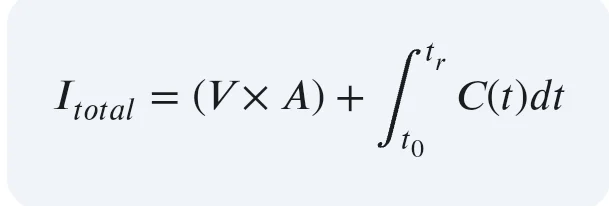
​From a technical perspective, the assessment of residual risk must now integrally incorporate the temporal variable. The modern formula to quantify real exposure in this unified crisis environment is defined as:

In this model, total impact is defined by asset value (V) and weighted threat (A), added to the integral of the accumulated cost of disruption (C) during the recovery period (t_r). This calculation demonstrates that total impact is not a static photograph of a lost asset, but a function of the time an organization remains disconnected from the system. As we move through 2026, true competitive advantage does not lie in waiting for the polycrisis to subside, but in accepting that systemic risk is the new foundation upon which any growth strategy must be built. Resilience is no longer an emergency plan; it is the capacity to absorb instability as an intrinsic part of the business model.


El laberinto de la opacidad: Fondos paralelos en el sector financiero y la elusión sistemática de obligaciones alimentarias

El laberinto de los embargos preventivos de AGIP: cuando la falta de notificación asfixia al contribuyente