Geopolitical Fragmentation and the Redesign of Global Value Chains: Assessing Strategic Shifts Amidst Middle East Instability
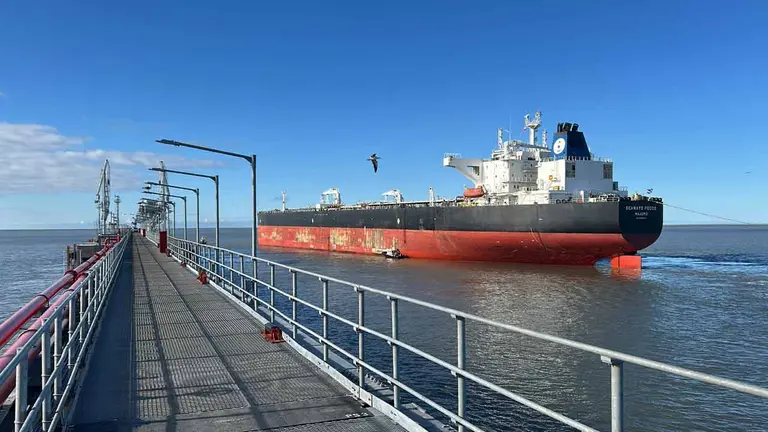
RNThe current military escalation involving the United States, Israel, and Iran has moved beyond a localized security crisis, evolving into a systemic shock that exposes the profound fragility of the 20th-century energy and maritime architecture. As the Strait of Hormuz—the world’s most critical energy chokepoint—faces functional closure, the resulting $80\%$ surge in Brent crude projections and the suspension of nearly $20\%$ of global LNG trade have triggered an immediate inflationary contagion across the Eurozone and Asian manufacturing hubs. For Europe, already grappling with depleted gas storage and a precarious industrial recovery, this disruption is not merely a logistical delay but a structural threat to its energy-intensive sectors. The forced diversion of maritime traffic around the Cape of Good Hope has added a minimum of 14 days to Asia-Europe transit, effectively neutralizing the efficiency of the Suez Canal and inflating freight costs to levels that render traditional just-in-time manufacturing unsustainable. This "long adventure" in the Middle East is catalyzing an irreversible transition from cost-optimized globalism to security-oriented "friendshoring," where the reliability of supply routes now outweighs the marginal costs of production.
This geopolitical impasse necessitates a radical re-evaluation of global supply chain geography, shifting the center of gravity away from volatile transit corridors toward the stable, resource-rich Atlantic-Pacific axis. In this emerging paradigm, the Southern Cone—comprising Argentina, Chile, and Brazil—stands as the most viable alternative for a comprehensive reorganization of raw material and food security networks. As the Middle East remains embroiled in kinetic conflict, the global market can no longer afford to ignore the strategic depth offered by Latin American "commodity sovereignty." Brazil’s agricultural dominance and expanding rare earth mining, combined with Argentina and Chile’s control over $50\%$ of the world’s lithium reserves and significant copper output, position the region not just as a "breadbasket," but as the indispensable industrial lung for the green and digital transitions. The realization of this shift requires a decisive pivot in international capital: moving from speculative engagement to the hardening of South American infrastructure, including the development of bi-oceanic corridors that bypass traditional maritime vulnerabilities. By integrating the vast lithium triangle and the fertile plains of the Mercosur bloc into a direct, secure supply link with European and North American industrial centers, the global economy can mitigate the stagflationary risks posed by Eurasian instability. The current conflict in Iran is the final signal that the era of Middle Eastern dependency has reached its limit; the resilience of the global order now depends on the systematic elevation of South America as the new cornerstone of the international trade architecture.


Strategic Competition Unfolds for the Management and Modernization of the Paraná-Paraguay Waterway

Resiliencia de Infraestructura Crítica en el Mercosur: Hacia una Red Logística Soberana ante Amenazas Hidrometeorológicas

Hacia una gobernanza sistémica del transporte de mercancías peligrosas: El imperativo de la articulación público-privada en el escenario argentino

Gestión de Riesgos en el Transporte de Mercancías Peligrosas: Hacia un Rediseño de los Protocolos de Seguridad Vial Urbana y Rural


Producción coordina acciones para la asistencia sanitaria y alimentaria de animales en el sur tucumano

La eficiencia del gasto público frente a la gestión de riesgos catastróficos: Un análisis de la vulnerabilidad estructural en Argentina

El Activo Resiliente: Valoración Inmobiliaria ante la Disrupción Hídrica en Argentina

El sector asegurador global ante un nuevo estándar de pérdidas catastróficas: el análisis técnico de Swiss Re