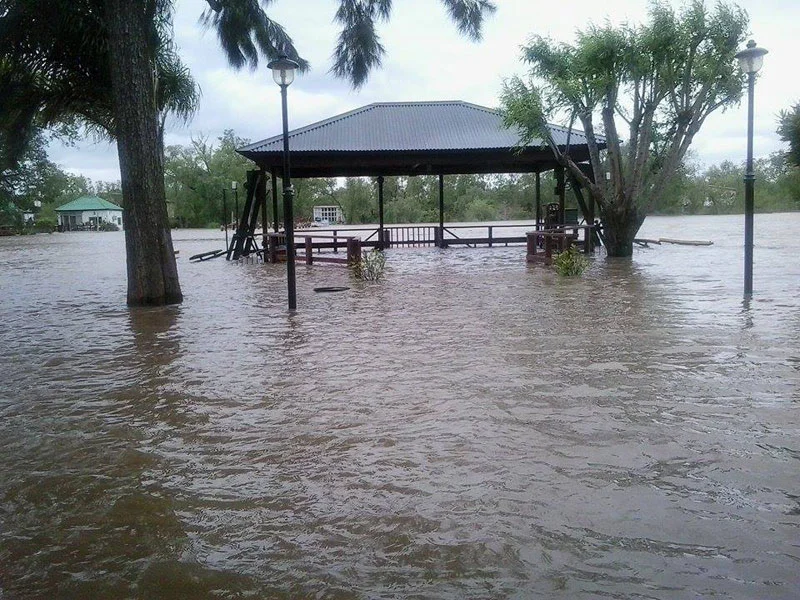


The New Brick-by-Brick Benchmark: Why Real Estate Must Systematically Adapt to Climate Extremes

The urgency of a universal climate resilience labeling system transforms property valuation, compelling developers, municipal governments, and the insurance industry to standardize actuarial risk metrics.
Real Estate Risk01 de junio de 2026 Peter Sundheimer

The global real estate market is undergoing an irreversible paradigm shift driven not by macroeconomic fluctuations or supply-chain volatility, but by the escalating frequency and severity of tail-risk weather events. Severe hydrometeorological phenomena, ranging from catastrophic pluvial flooding to unprecedented thermal stress, have transitioned from theoretical long-term projections into immediate, quantifiable balance-sheet liabilities. In this high-volatility environment, the real estate sector can no longer rely on retrospective historical data for asset pricing and structural design. Instead, it must systematically integrate robust adaptation and mitigation frameworks into capital allocation models to preserve asset valuation and mitigate structural default risks.

This transition demands a fundamental restructuring of urban development economics. Historically, real estate investment committees heavily weighted location premium and immediate yield projections over long-term physical risk exposure. Today, structural vulnerability requires that climate resilience be priced into the initial land acquisition phase, architectural specifications, and engineering designs, specifically targeting optimized stormwater retention systems, enhanced thermal envelope efficiencies, and localized micro-grid redundancies. Developers must cease underwriting projects based on historical baselines; they must design assets tailored to a dynamic shifting climate, where an asset's structural capacity to absorb shock and minimize business interruption determines its long-term terminal value and liquidity.

To catalyze this systemic adaptation, a formalized, tri-partite alignment must be established among municipal authorities, real estate developers, and the insurance industry. Municipal governments possess regulatory zoning authority and localized hazard maps, yet they frequently operate without the capital agility or market-driven incentives of the private sector. Conversely, underwriters and reinsurers possess the sophisticated actuarial datasets and predictive loss models necessary to price the exact probability of structural failure and financial loss. Aggregating these distinct capabilities is the only viable pathway to engineering a standardized, transparent risk-transfer mechanism: a universal Climate Resilience Label for residential and commercial assets.

From an actuarial standpoint, this labeling system introduces a critical mechanism for price discovery and transparency in property markets. Much like energy efficiency certifications transformed operational expense modeling, a standardized climate resilience index allows prospective buyers, institutional investors, and tenants to evaluate the exact Probable Maximum Loss (PML) and Average Annualized Loss (AAL) associated with an asset before executing a transaction. This certification will directly alter cash flow modeling, as it dictates the pricing of property-casualty insurance premiums, shapes the debt service coverage ratio (DSCR) requirements of commercial lenders, and ultimately influences mortgage securitization. Low-scoring properties will face accelerating capital costs and insurance de-risking, while resilient structures will capture a distinct valuation premium.

To prevent structural arbitrage and market distortion, this regulatory framework must maintain strict international universality. Implementing fragmented, highly localized compliance standards would inevitably introduce regulatory arbitrage, enabling high-risk assets to mask systemic vulnerabilities under inconsistent regional criteria. A unified, cross-border metric ensures that a specific hazard classification or structural mitigation score reflects an identical risk profile whether the asset is located in an emerging market or a primary global hub. Only through a globalized, scientifically rigorous actuarial standard can the international financial ecosystem accurately price real estate assets, linking long-term market value directly to climate survivability.

Te puede interesar
Lo más visto